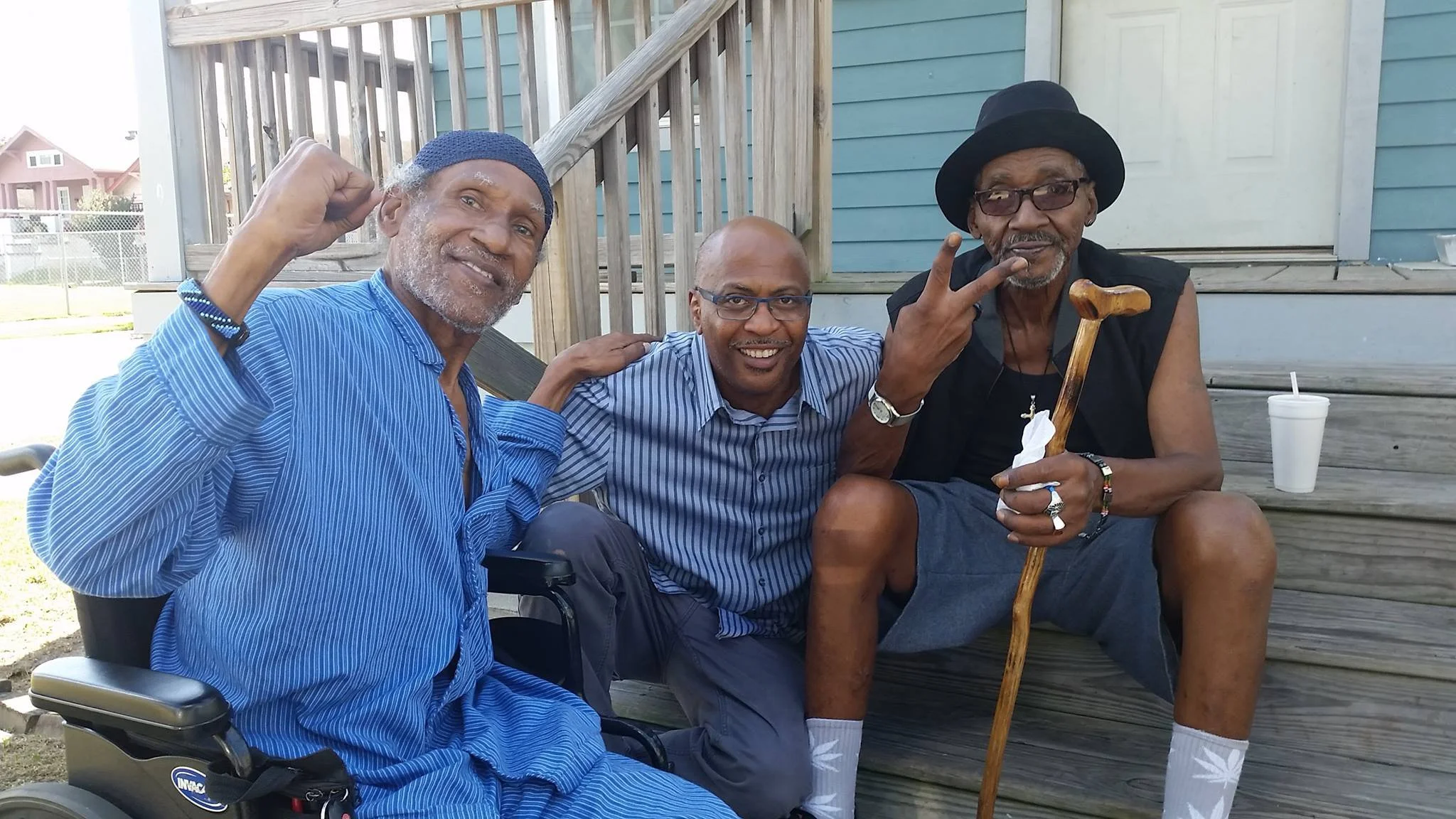
Freedom Fighters Mwalimu Johnson, John Thompson, and Glenn Ford, 2014
The John Thompson Archive
The Resurrection Archives were inspired by a fierce desire to preserve the memory and legacy of John Thompson. We embarked on this first archive in 2025, as a collaboration between LaVerne Thompson, who received a 2024 Soros Justice Fellowship to complete the project, and Freedom to Grow, whose work is headquartered at the John Thompson Legacy Center at 1212 St. Bernard Ave in New Orleans, LA. The project is named after his transformative organization Resurrection After Exoneration, which was headquartered in the building for 10 years, until JT’s passing in 2017.
John Thompson (JT) was born on September 6th, 1962 in New Orleans, LA. Though his childhood was not easy, it was anchored by a loving grandmother. Somewhat begrudgingly known as “Nut” in the neighborhood (because of a mishearing of the nickname given to him by his grandmother,“Nue”), JT spent his teen and young adulthood selling drugs and stolen goods.
This history would be used against him in two cases: the murder of Ray Liuzza Jr, a hotel executive from a prominent New Orleans family, and an armed robbery case where JT was identified only after his arrest for the murder made front page news. Prosecutorial interference, including the hiding of evidence, and manipulating the order of trials to secure a death penalty conviction, led to a wrongful conviction and unjust incarceration for 18 years, including 14 years on death row at Angola.
JT was ultimately exonerated of all charges, and freed in 2003.
JT survived seven stays of execution. His story is both extraordinary, and all-too-typical of the people whose lives were mishandled by the Louisiana criminal legal system. You can find the details of his case—riveting, cinematic, and heartbreaking—in the oral histories of his lawyer, Michael Banks, who fought tirelessly for years for JT’s freedom, and of the investigator Elisa Abolafia, whose discovery of the hidden blood evidence days before his final scheduled execution date led to the new trial and exoneration. His story is also chronicled in the book Killing Time.
This archive explores the founding of JT’s organization Resurrection After Exoneration, his life-long effort to achieve prosecutorial accountability, and his lasting impact on the movement to center the voices of formerly-incarcerated leadership.
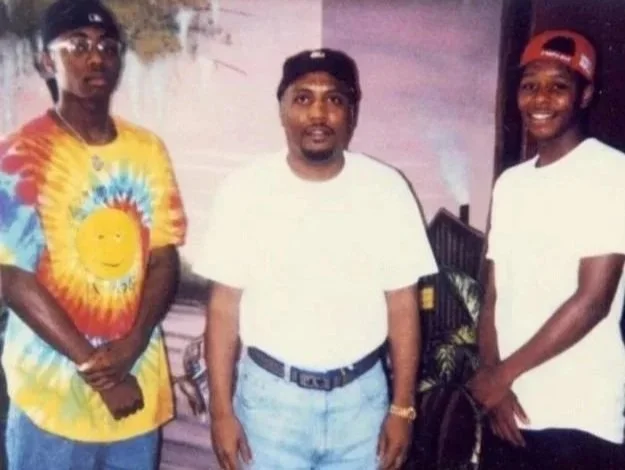
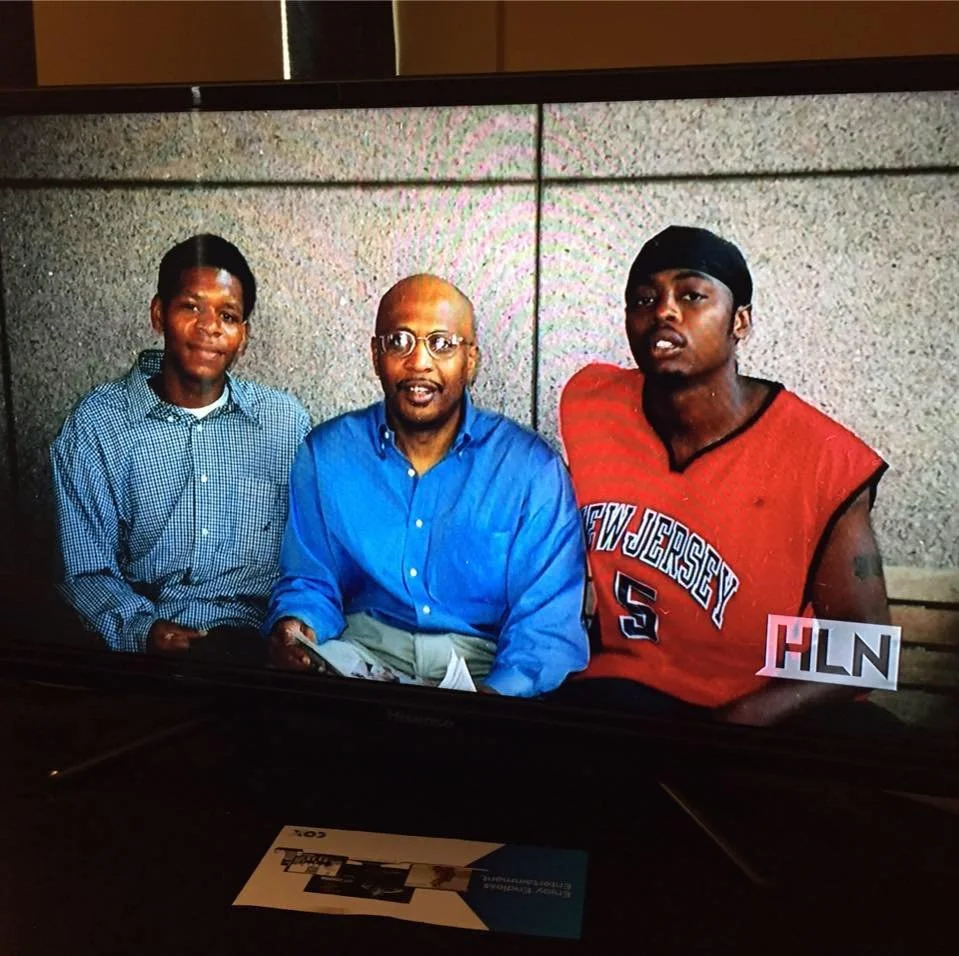
JT with sons John Jr. and Dedric in the visiting room for death row at Angola Prison, 1990s
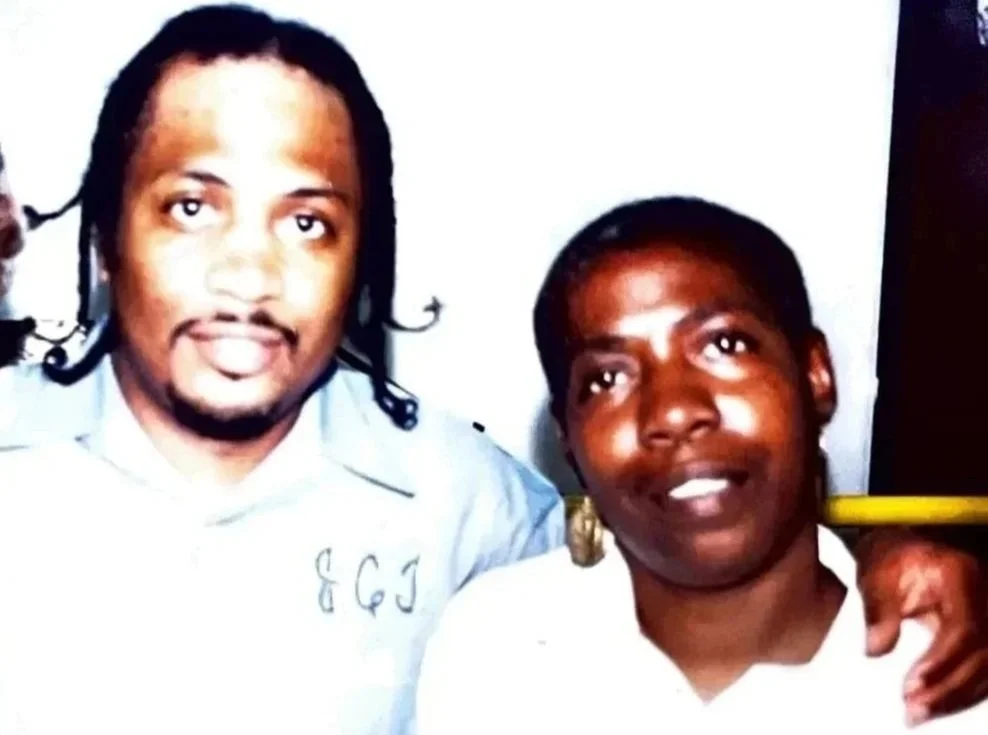
JT with his mother Josephine Crosby, 1990s
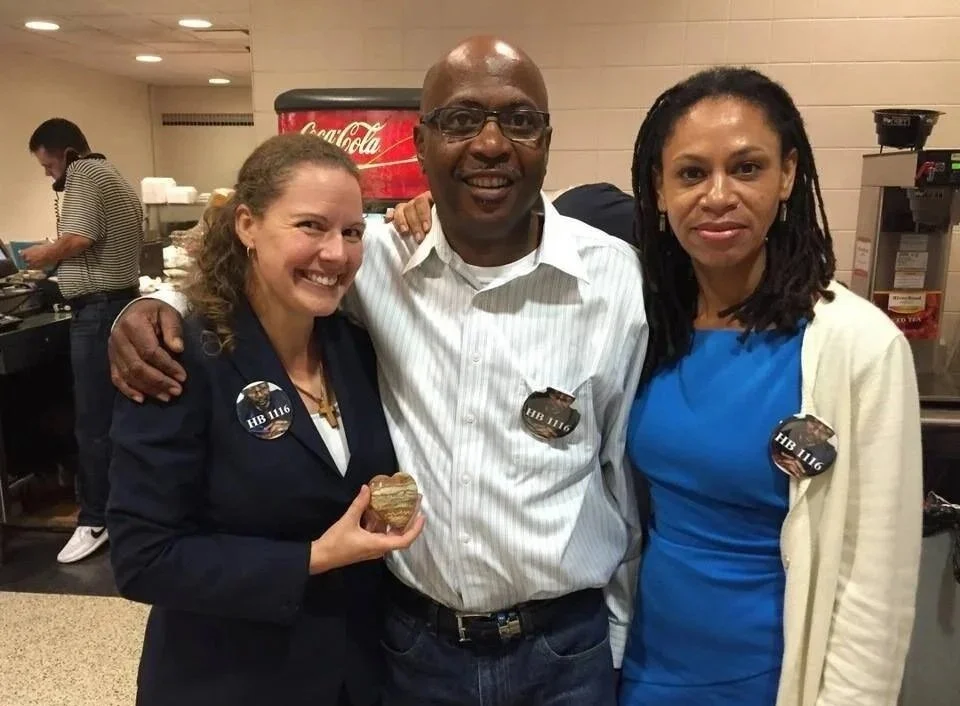
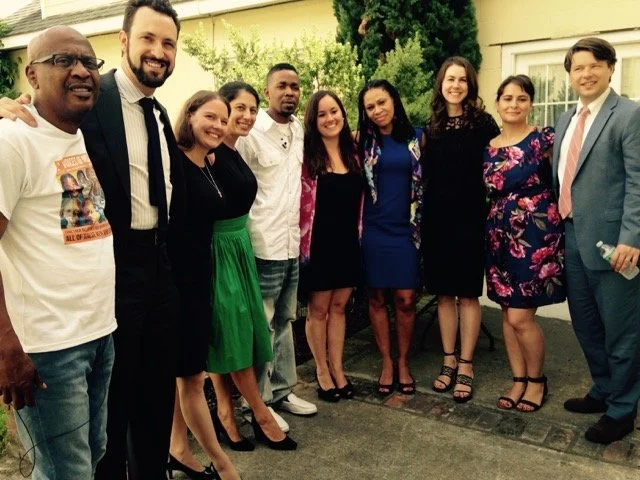
JT with friends and fellow advocates Alison McCrary and Andrea Armstrong, 2016
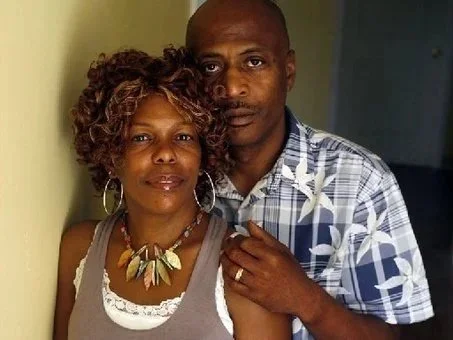
JT and wife LaVerne Thompson for The Advocate, 2015