Connick v. Thompson and the Fight for Prosecutorial Accountability
In 1984, JT began a journey into the depths of the criminal legal system, culminating in a long-awaited exoneration after 14 years on death row at Angola Prison. He survived 7 stays of execution, and ultimately lost 18 years of his life to the criminal legal system.
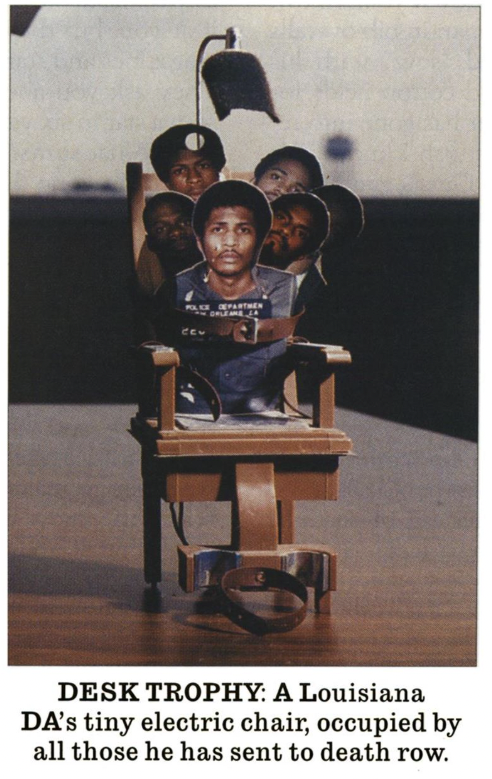
He was tried and found guilty in two separate cases, one for an armed robbery charge, and another for the murder of Ray Liuzza Jr. Both were prosecuted under Orleans Parish District Attorney Harry Connick Sr., whose thirty-year reign of terror resulted in a reported 32 exonerations. 97% of these exonerees were Black.
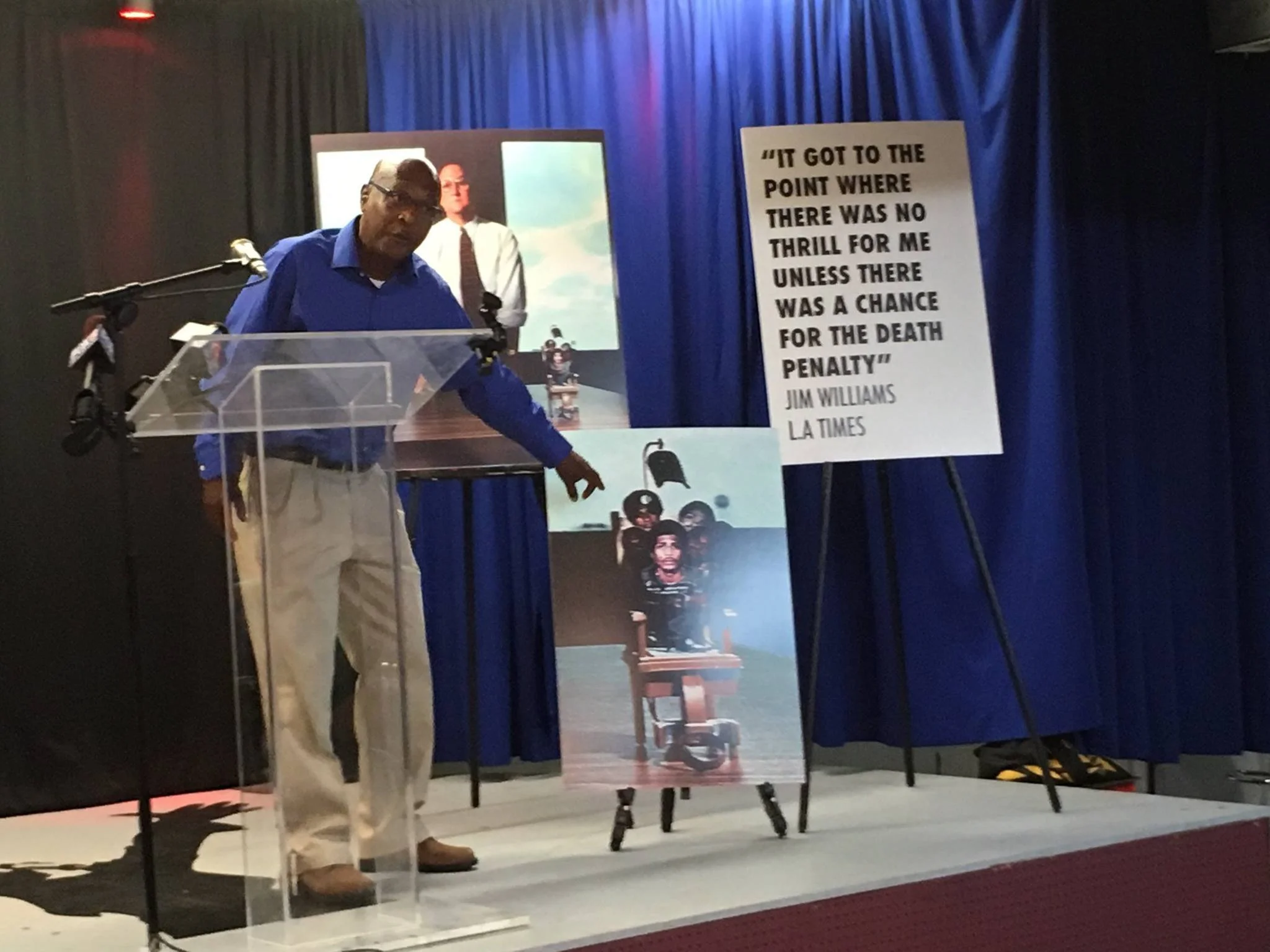
Connick’s office manipulated the order of JT’s cases, trying him first for an armed robbery of a family who only identified him as the perpetrator after his arrest for the Liuzza murder made front page news. This order made it possible to seek the death penalty, with that guilty conviction painting JT as someone with a history of violence. It was during this first trial that someone in Connick’s office hid blood evidence that proved JT did not rob the family. This was not uncovered until a death bed confession led investigator Elisa Abolafia to a last-minute discovery just days before his death.
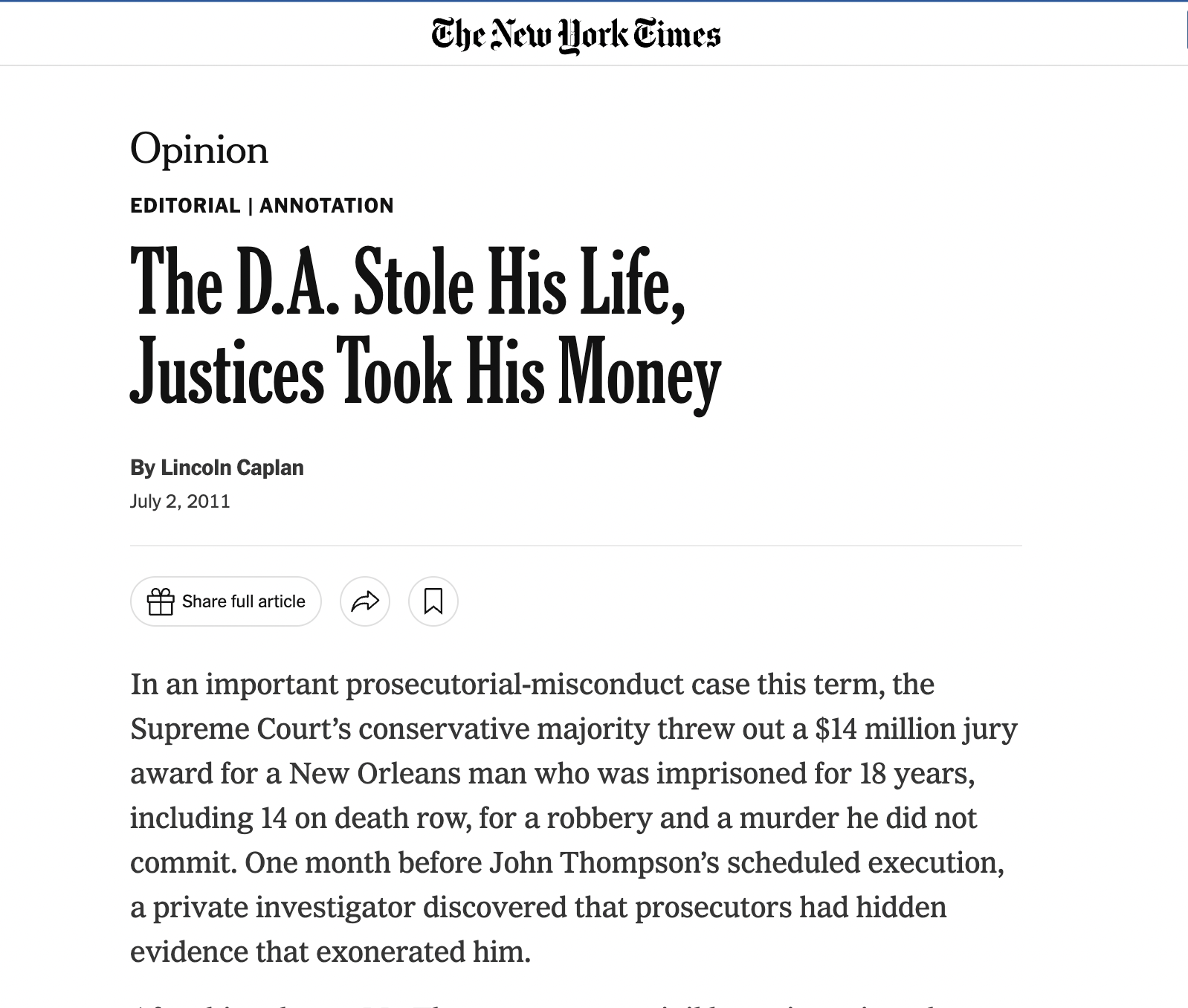
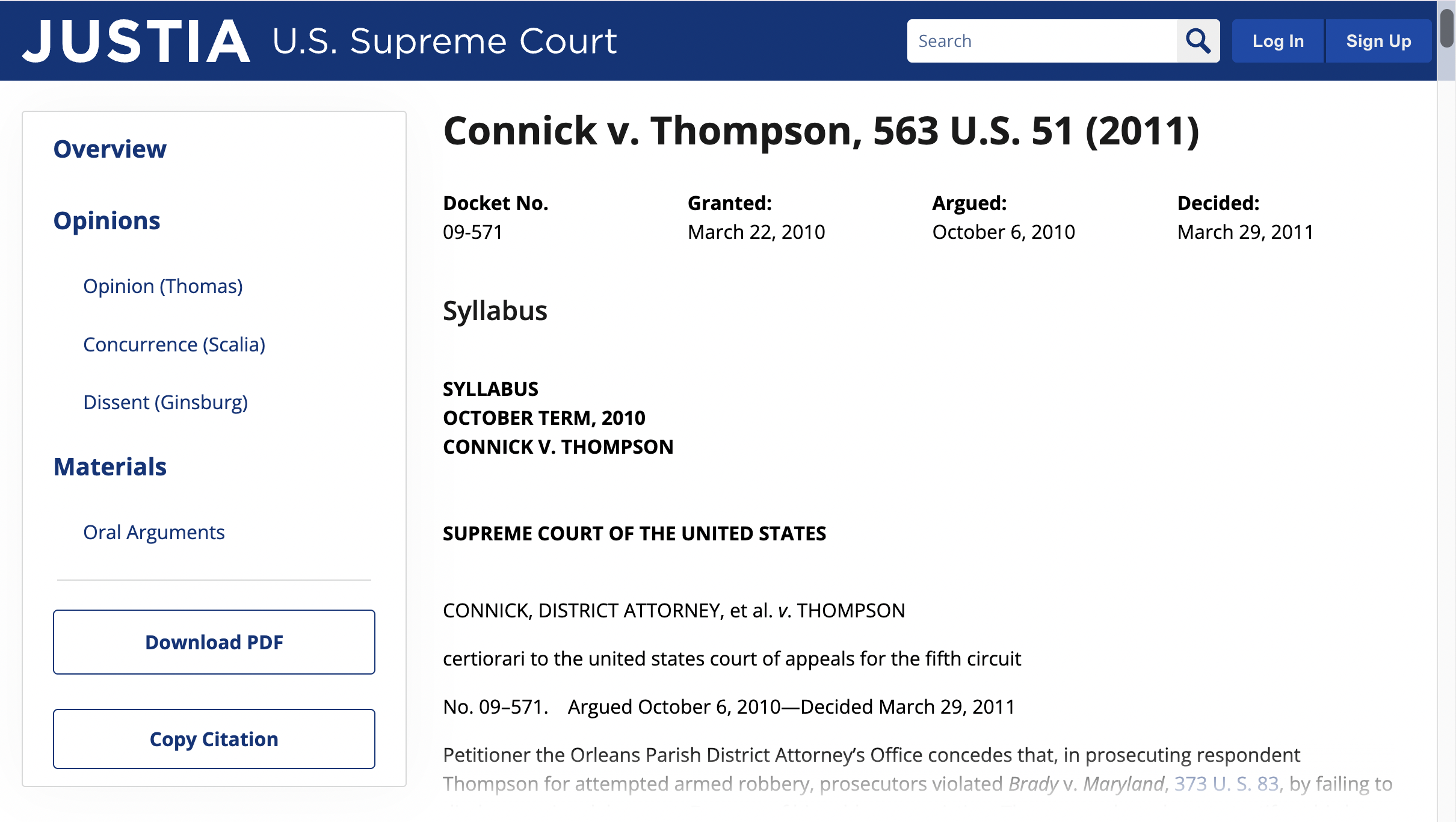
After a new trial led to his exoneration, JT sued Connick’s office, alleging a Brady violation. He was awarded a $14 million judgement against Connick and his office, $1 million for every year he was held unjustly in Angola. On appeal, the case made its way to the Supreme Court.
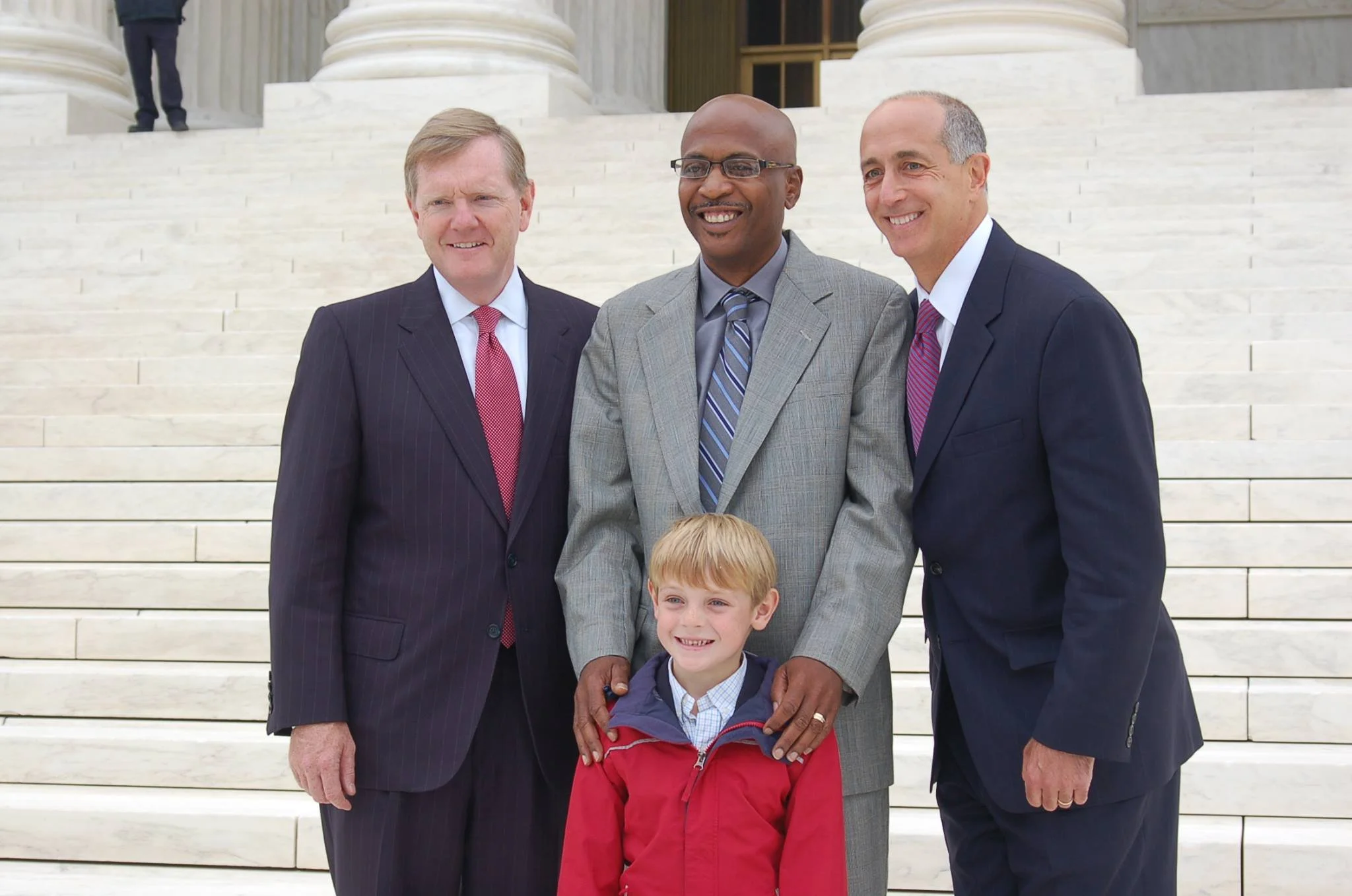
In 2011, in a majority opinion written by Clarence Thomas, the Supreme Court reversed the ruling, leaving JT with no compensation for the years of his life stolen from him. As his friends note, it was not the loss of money that moved him to spend the rest of his life fighting for justice — it was the thought of all those who, like him, lost decades of their lives to the system, had to rebuild families and communities, and faced incredible violence and even death.
The Connick v. Thompson precedent effectively means that prosecutors cannot be held liable for misconduct within their offices, encouraging a system that prioritizes conviction rates as a measure of success, rather than true justice.
John spent the rest of his life fighting to hold prosectors accountable, and educating future lawyers about the impact of wrongful convictions. Learn more in the oral histories of Professor Andrea Armstrong and Mercedes Montagnes, who both became dear friends of JT, and partners in the fight for prosecutorial accountability, after meeting him during their time in law school.
“John went to law schools all over this country talking to future prosecutors, future public defenders about what was happening inside, and that just undoubtedly had a huge impact. Prosecutorial accountability is a huge piece of the work that we do now that we never did before.”
Supreme Court Case
JT’s Fight — in His Words
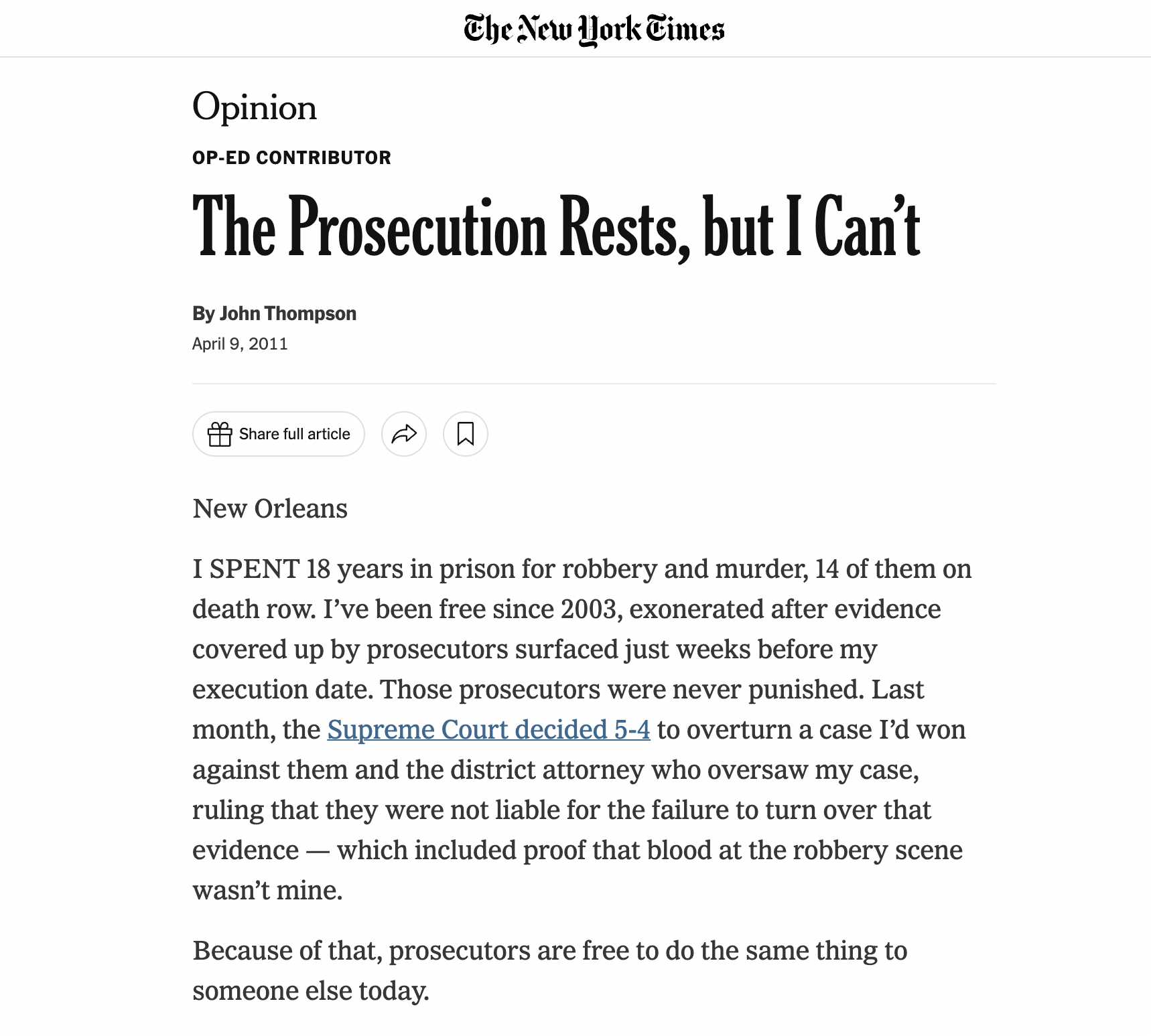
Coverage of JT’s Fight for Accountability